Stricter Than the FDA: The Relentless Safety Science Powering Every Goop Product
If you've ever stood in a Goop pop-up, picked up a sleek bottle of something that costs more than your utility bill, and wondered what exactly you're paying for — the answer, at least in part, is science. Not the vague, aspirational kind that gets tossed around in wellness marketing. Actual, rigorous, third-party-verified science that, according to people close to Goop's product development process, routinely exceeds what the FDA requires of beauty and wellness brands operating in the US.
That's not a small thing. And it didn't happen by accident.
The Regulatory Gap No One Talks About
Here's something most consumers don't realize: the FDA's oversight of cosmetics and personal care products in the United States is, historically speaking, pretty limited. Under the Federal Food, Drug, and Cosmetic Act, cosmetic companies are not required to submit safety data to the FDA before putting a product on shelves. There's no mandatory pre-market approval for most beauty items. Brands are largely trusted to self-police.
That system works fine — until it doesn't. And for Gwyneth Paltrow, who built her entire brand identity around the idea that what you put on your body matters just as much as what you put in it, relying on the baseline was never going to cut it.
"The regulatory floor is a starting point, not a destination," one Goop product development insider explained. "Gwyneth's expectation from day one was that we'd treat safety the way a pharmaceutical company treats efficacy — obsessively, with documentation to match."
What Goop's Testing Actually Looks Like
So what does going beyond FDA requirements actually look like in practice? It starts before a single ingredient makes it into a formula.
Goop's internal review process — sometimes referred to internally as the "clean standards" protocol — evaluates every ingredient against a restricted substances list that draws from multiple international regulatory frameworks, including the European Union's far more stringent cosmetics regulations, which ban or restrict over 1,300 ingredients compared to the FDA's roughly 11. That gap alone tells you something.
But Goop doesn't stop at the EU list either. The brand cross-references databases maintained by organizations like the Environmental Working Group (EWG) and applies additional scrutiny to any ingredient with emerging safety concerns, even when definitive regulatory action hasn't been taken yet. It's a precautionary approach — one that critics sometimes call overcautious but that Goop's loyal customers have come to rely on as a form of trust.
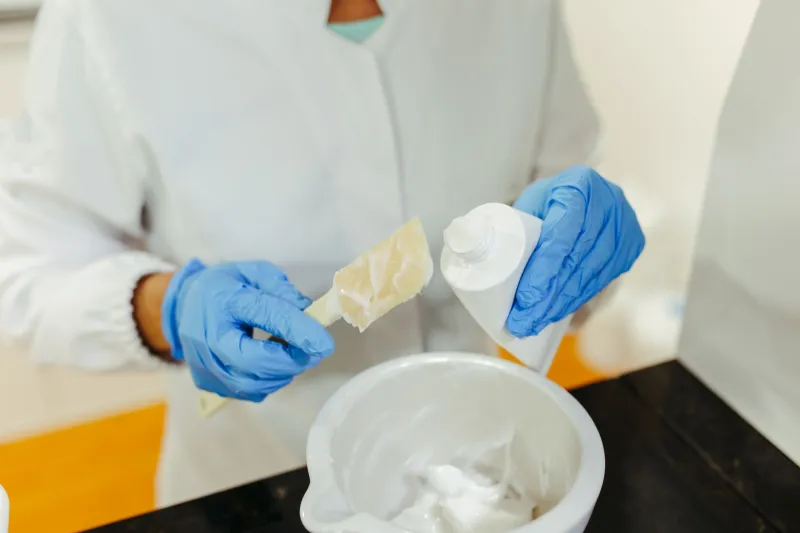
Once a product moves into formulation, it undergoes third-party testing through independent labs that verify both ingredient integrity and finished-product safety. This includes stability testing, contamination screening, and in some cases, independent efficacy testing to ensure that what's on the label actually does what it claims.
"There's a difference between a brand that says 'clean' and a brand that can prove it," said one third-party certifier who has worked with multiple luxury wellness companies. "Goop is in the category that shows its work."
Transparency as a Business Strategy
Gwyneth has always understood something that took the broader beauty industry years to catch up to: transparency isn't just an ethical choice — it's a competitive advantage.
At a time when ingredient disclosure was treated as optional, Goop was publishing full ingredient lists, explaining why each component was included, and flagging anything that might be a concern for sensitive users. That level of openness was genuinely unusual in the early 2010s, when most luxury brands considered their formulas proprietary secrets.
The bet paid off. As consumer awareness around ingredients grew — fueled by apps like Think Dirty and a broader cultural shift toward label-reading — Goop's existing infrastructure of transparency meant it was already speaking the language its customers were learning. The brand didn't have to pivot. It had been there all along.
There's also a liability logic here that Gwyneth, who has navigated her share of legal scrutiny, clearly internalized. A brand that documents its safety processes meticulously is a brand that's harder to sue successfully. When you can demonstrate that your testing protocols exceed industry norms, you're not just protecting consumers — you're protecting the company.
The Certification Ecosystem
Beyond internal protocols, Goop has pursued third-party certifications that serve as external validators of its safety claims. These aren't just marketing badges. Certifications from organizations like NSF International or EWG Verified require brands to submit to independent audits, provide documentation, and meet standards that the certifying body — not the brand — controls.
For consumers, this matters because it breaks the self-reporting loop. You're not just taking Goop's word for it. You're taking the word of an independent organization with its own reputation on the line.
This certification strategy also signals something about Goop's long-term positioning. These aren't cheap or easy processes. They require ongoing compliance, regular re-evaluation, and a willingness to be held accountable publicly. That's a level of commitment that smaller or less serious brands simply don't sustain.
Why This Matters Beyond Goop
Here's the bigger picture: when a brand with Goop's cultural reach sets a higher bar, it creates pressure across the industry. Competitors notice. Retailers notice. And increasingly, consumers notice — and start asking why their other favorite brands aren't doing the same.
Several industry observers have pointed to the "Goop effect" in clean beauty as a real market force, pushing even mass-market brands to rethink their ingredient standards and invest in more rigorous testing. Whether you love or loathe Gwyneth's particular brand of wellness, the downstream impact on industry norms has been measurable.
"She made safety aspirational," one beauty industry analyst put it bluntly. "That sounds obvious now, but ten years ago, 'safe' wasn't a luxury positioning. It was a baseline assumption that nobody actually verified. Goop changed that conversation."
The Bottom Line
Goop products are expensive. That's not a secret, and it's not going to change. But understanding why they carry a premium requires looking past the beautiful packaging and the celebrity founder to the infrastructure underneath — the labs, the certifiers, the ingredient reviewers, and the internal protocols that treat every formula like it has something to prove.
For Gwyneth, safety was never just a marketing message. It was the foundation that made every other claim credible. And in an industry where trust is both the hardest thing to earn and the easiest thing to lose, that foundation turns out to be worth every penny of the price tag.
If you're a Goop loyalist, this is the part of the story that deserves more airtime. The candles and the supplements get the headlines. The science gets the results.